Wayne County's Trusted Septic Network
Septic Repair & Pumping — Jesup, GA | Wayne County, Georgia
Connect with qualified septic service providers for repair, septic tank pumping, and tank cleaning across Wayne County, Georgia — including Jesup, Odum, Screven, and Gardi. Backed-up drains, sewage odors, and wet ground near the drain field are warning signs that need prompt attention. Get an honest assessment with no hidden fees and no pressure to buy services you don't need. Emergency service providers available across Wayne County.
How much does septic pumping cost in Jesup Wayne County?
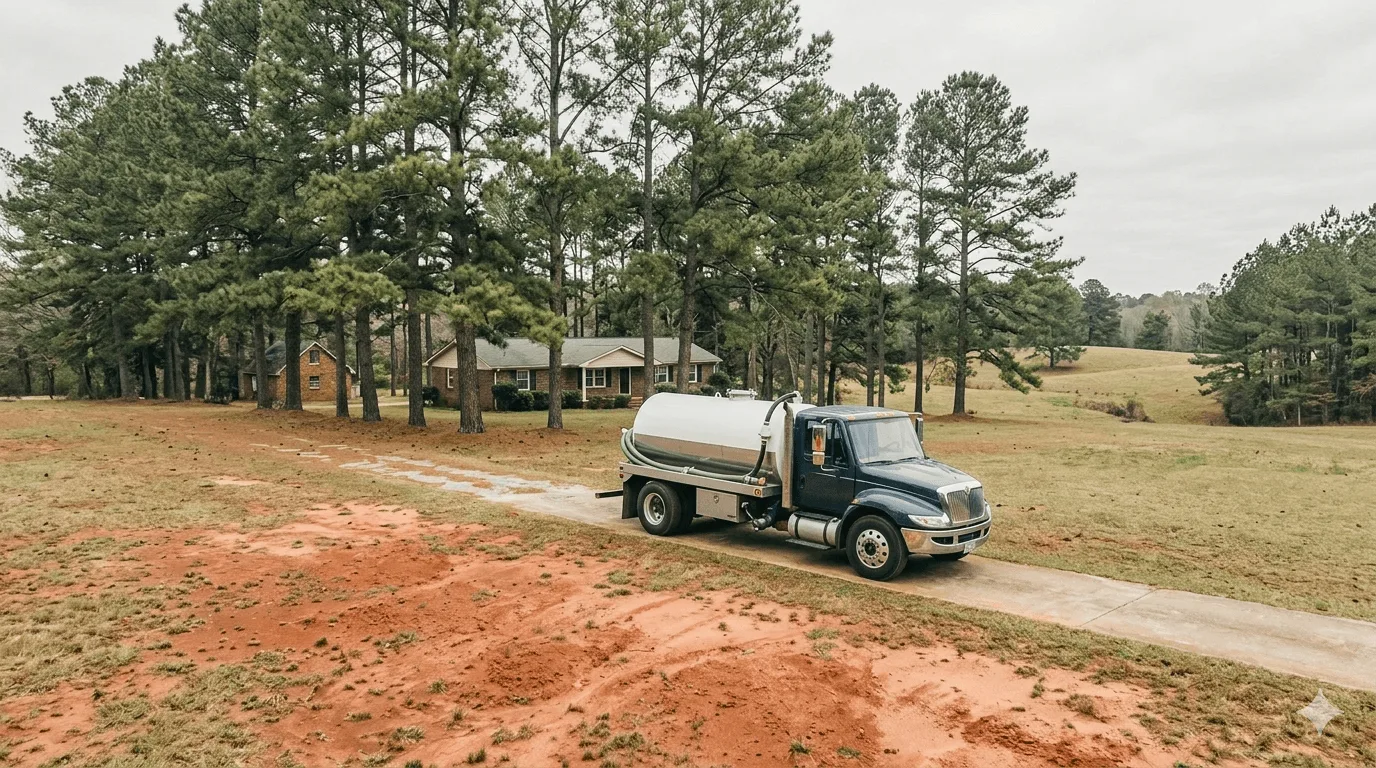
Routine septic tank pumping in Jesup, Wayne County typically costs $250 to $450 for a standard residential tank. Coastal plain sandy loam soil drains differently than other regions, which can affect pumping frequency and system design. Service calls include a free on-site assessment, and most properties benefit from pumping every three to five years.
What Makes Our Approach Different
Coastal plain soils — sandy loam with a shallow water table — demand specific system sizing and placement. Georgia EPD permit requirements add local knowledge that out-of-area crews simply don't have. Here's what that means for your property.
Built for Local Soil Conditions
Coastal plain sandy loam drains differently than red clay. We design and repair systems around what the ground here will actually accept — site-specific solutions, not a generic template.
Georgia EPD Permitting — Handled for You
New installations and replacements require permits from the Environmental Protection Division plus engineered soil evaluations. We manage the entire permitting process so you don't have to navigate the paperwork or chase approvals.
A Free Look Before Any Recommendation
Tank access, system age, household size, and soil type all affect what your property actually needs. We assess the full picture first — you'll never receive a quote for work that isn't warranted by what we find.
Every Stage, From Pump-Outs to Full Replacements
Scheduled pump-outs, pre-sale inspections, urgent repairs, drain field remediation, and complete system tear-outs. One trusted team for the entire lifecycle of your on-site wastewater system.
What We Do — Across the Full Life of Your System
Most homes here rely on a private on-site system rather than municipal sewer. That makes regular upkeep, timely inspections, and a responsive local team essential to protecting your drain field and your property's value.
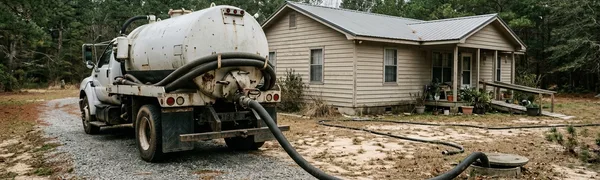
Septic Tank Pumping
Routine and emergency pump-outs for residential tanks across the region. Regular pumping every 3–5 years prevents backups, drain field damage, and costly repairs — it's the single most important thing you can do to protect your system.
Learn more ›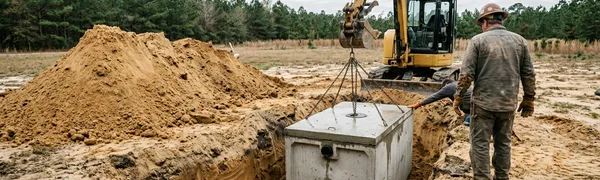
Septic System Installation
New system installation from soil evaluation to final Georgia EPD approval — conventional gravity systems, chamber systems, and alternative designs suited to local coastal plain soil conditions. All permits handled start to finish.
Learn more ›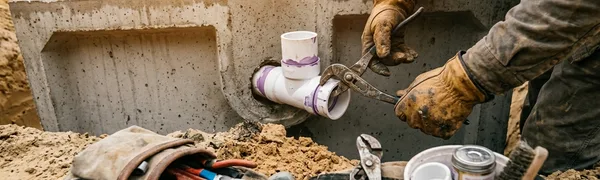
Septic Tank & System Repair
Diagnosis and repair of system failures: cracked tanks, failed baffles, clogged distribution boxes, broken lines, and pump failures — addressed quickly before the problem reaches the drain field and becomes far more expensive.
Learn more ›
Septic Inspection
Pre-purchase and routine system evaluations — written report covering tank condition, baffle status, drain field performance, and estimated remaining life. Highly recommended before closing on any local property with an on-site system.
Learn more ›
Drain Field Repair
Assessment and remediation of saturated or failing leach fields. The region's sandy loam coastal plain soil gives drain fields better recovery potential than red clay areas — aeration and restorations can restore function in many cases without a full rebuild.
Learn more ›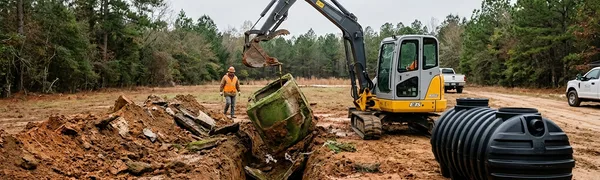
Septic System Replacement
Full replacement for failed, undersized, or end-of-life systems — designed around the property's actual daily flow, permitted through Georgia EPD, and installed to code. We give an honest assessment first: if repair makes more sense, we'll tell you.
Learn more ›What You Can Expect to Pay — No Surprises
Every system and situation is different, so these are general ranges. Tank pumping for a standard residential tank typically runs $250 to $450. Repairs span from $500 for a simple fix to $5,000 or more for drain field work. The only way to get an accurate number for your property is an in-person look — and that costs you nothing.
All figures are estimates — final pricing depends on tank size, accessibility, and system condition. Get your free on-site assessment →
Frequently Asked Questions About Septic Systems
Straight answers to the questions local homeowners ask most — from warning signs to costs to what happens when the truck shows up.
How often do I need to pump my septic tank?
Most residential systems need pumping every three to five years. The exact interval depends on household size, tank capacity, and water usage — a family of four with a 1,000-gallon tank typically needs it every three to four years. Homes with garbage disposals or older systems may need more frequent attention. A technician can assess your specific setup and recommend a schedule during the first visit.
When should a septic tank be pumped — and what are the warning signs?
Stick to a regular schedule every three to five years, and call immediately if you notice any of these warning signs:
- Slow drains throughout the house, not just one fixture
- Sewage odor indoors or near the drain field
- Wet or spongy ground over the drain field area
- Unusually lush grass directly above the leach field
- Gurgling sounds in pipes after flushing
- Sewage backup in the lowest drains in the house
- The tank hasn't been pumped in more than five years
- You're selling the property and need a pre-purchase inspection
Pre-purchase inspections are strongly recommended before closing on any property with an on-site system.
Do I really need to service my septic tank?
Yes — regular maintenance isn't optional. Without periodic pumping, solids accumulate past the outlet baffle and flow into the drain field, clogging leach lines and saturating the soil. Once the drain field fails, remediation is expensive and sometimes requires full replacement. Routine pumping every three to five years costs a fraction of emergency repair or system replacement. Georgia EPD also requires permitted systems to stay in working condition.
What happens if I don't pump my septic tank?
Without regular pumping, solids build up past the outlet and flow into the drain field. Biomat forms in the leach lines and surrounding soil, reducing percolation — starts with slow drains, progresses to wet ground, and ends with complete system failure that requires costly remediation. The region's sandy loam drains better than red clay counties, but damage from a neglected tank is still expensive and sometimes irreversible without full field replacement. Keeping up with scheduled maintenance is the most cost-effective thing you can do.
What are the signs of a failing septic system?
The most common signs are slow drains throughout the house, sewage odor near the home or drain field, wet or spongy ground over the leach field area, and unusually lush grass directly above the field lines. In serious cases, sewage may surface above ground or back up into the lowest fixtures. A system showing any of these symptoms needs professional assessment promptly — continued use accelerates soil damage and can turn a repairable problem into a full replacement.
What do I do if my septic tank is backing up?
Stop using water immediately and contact a licensed contractor for emergency service. Reduce water use to an absolute minimum until the tank can be pumped — running water into an overloaded system pushes effluent into the drain field and causes additional damage. Sewage backup inside the home is a health hazard; do not attempt to open the tank yourself.
Is a full septic tank an emergency?
A full tank that hasn't caused backup yet can usually be resolved with a prompt scheduled pump-out — but don't delay. If the full tank is already causing slow drains, sewage odor, or wet ground over the drain field, it requires immediate attention to prevent drain field damage. Any sewage backup inside the home is an emergency requiring same-day service.
Can a septic tank be repaired, or does it need replacement?
Many problems can be repaired without replacing the entire system — failed baffles, cracked inlet or outlet pipes, damaged distribution boxes, and pump failures are all fixable. Concrete tanks with hairline cracks can sometimes be sealed. But tanks with major structural failure may need replacement. The key is diagnosis: knowing exactly what failed determines whether repair or replacement is the right call, and a site inspection is the first step.
Can a cracked septic tank be repaired?
Depending on severity and location, yes. Hairline cracks in concrete tanks are often sealed with hydraulic cement or specialized coatings and may provide years of additional service. Large structural cracks, cracks below the waterline that allow groundwater infiltration, or cracks in plastic or fiberglass tanks are harder to repair reliably and often require replacement. A technician needs to inspect the crack directly to determine viability.
Can a drain field be repaired or does it always need replacement?
A failing drain field can sometimes be remediated rather than replaced. Aeration treatment, resting one section of the field, or installing a new distribution line may restore partial or full function. The local sandy loam soil tends to drain better than the red clay found in middle Georgia counties, giving some fields here better recovery potential. Full replacement is necessary when the soil is permanently saturated or the field is physically damaged. An assessment determines which path makes sense.
Is septic repair covered by homeowners insurance?
Standard policies don't typically cover septic repair caused by normal wear, age, or lack of maintenance. Some policies cover sudden, accidental damage — like a tank collapse or burst pipe from a covered event — but routine pump-outs, drain field replacement, and general maintenance are almost always excluded. A small number of home warranty plans include septic coverage. Check your policy and ask specifically about on-site wastewater systems. Keeping up with regular pumping is your best protection against large repair bills.
How do I find a reliable local contractor?
Septic systems are serviced by licensed contractors with state certifications for on-site wastewater work. New installations and replacements also require Georgia EPD involvement for permitting and soil evaluation. When choosing a provider, look for someone familiar with local soil conditions, EPD requirements for southeast Georgia, and the specific challenges of rural property systems. Qualified providers cover all of this region, including Jesup, Odum, Screven, and Gardi.
How do you fix a failing septic system?
It starts with identifying what failed — the tank, baffles, distribution box, lines, pump, or drain field — since each component has different repair or replacement options. A licensed technician pumps the tank, inspects everything accessible, and may perform a drain field test before recommending a plan. New installations require Georgia EPD permits and a soil evaluation. Never attempt to open or repair a septic tank yourself — the gases inside are hazardous.
What happens during a septic tank pump-out?
The contractor locates and uncovers the tank access lid, then a vacuum truck removes all accumulated solids, sludge, and liquid. While the tank is empty, the technician inspects the interior walls for cracks, checks the inlet and outlet baffles for damage, and examines the effluent filter if one is installed. The whole process typically takes one to two hours for a standard residential tank. The pump-out itself is about 20 to 40 minutes; the rest is setup, inspection, and cleanup.
Can I pump my own septic tank?
It's not recommended and may violate state regulations on wastewater handling and disposal. Septic tanks produce hydrogen sulfide and methane gases that are toxic and potentially fatal in enclosed spaces — opening a tank without proper equipment is dangerous. Licensed contractors have the vacuum equipment, safety training, and disposal permits required to pump and transport septage legally. Professional pumping also includes a visual inspection that catches developing problems early.
How long does septic tank pumping take?
A routine pump-out takes one to two hours from arrival to completion for a standard 1,000- to 1,500-gallon residential tank. Timing depends on accessibility — tanks with risers or exposed lids are faster than buried lids that require digging. Tanks that have gone many years without service may take longer due to compacted solids. The actual pump-out is 20 to 40 minutes; the rest is setup, inspection, and cleanup.
Who does septic repair near me in Wayne County, GA?
If you're searching for septic repair near you in Wayne County, Georgia, qualified providers serve all of Wayne County — including Jesup, Odum, Screven, and Gardi. Available repair services include baffles, risers, lids, distribution boxes, effluent filters, broken septic lines, and failing drain fields. Free on-site estimates are provided before any repair work begins, and most assessments in the Wayne County area are scheduled within one to two business days of your request.
Is septic pumping near me available in Jesup, GA?
In Wayne County, Georgia, septic tank pumping — including routine pump-outs, septic tank cleaning, and tank emptying — is available for residential and commercial properties throughout Jesup, Odum, Screven, and Gardi. Septic pumping in Wayne County typically costs $300 to $550 for a standard residential system. Wayne County's sandy loam soil conditions generally support good drain field absorption, but tanks still require pumping every three to five years. Same-week scheduling available — request a free estimate online.
Is septic tank cleaning near me available in Wayne County?
Yes — septic tank cleaning and tank emptying service is available throughout Wayne County, Georgia. Septic tank cleaning removes accumulated solids, inspects baffles and the effluent filter, and assesses drain field condition. Regular cleaning every three to five years protects the drain field and prevents far more expensive repairs. Service providers cover Jesup, Odum, Screven, Gardi, and surrounding Wayne County communities — call or request online for scheduling.
Serving Your Part of Southeast Georgia
Jesup is the county seat and largest community in this part of the coastal plain. Most rural residential properties here run on private septic systems — in Odum, Screven, Gardi, Mershon, and the surrounding areas. Qualified service providers are available throughout the entire county.
Many rural properties here depend on both a private well and a septic system — the two often go hand-in-hand during new construction. If your property needs a new well, pump repair, or water testing, Jesup Well covers the region. For site prep, clearing, or brush removal before an installation, Jesup Land Clearing serves local property owners. And if you need gravel for a driveway, drain field, or construction pad, Jesup Gravel delivers across the area. Jesup Septic is part of the Home Services Georgia network — a regional directory covering septic, well drilling, land clearing, gravel, and tree service providers across 9 rural Georgia counties including Wayne, Bulloch, and Toombs.
Tell Us What's Going On
Describe what's happening with your system, and a qualified local provider will come take a free look. No obligation, no upsell pressure — just an honest assessment and a clear estimate before any work begins.
We connect you with experienced local providers — not a national chain. That means contractors who understand the local soil, the EPD requirements, and the real-world conditions your system deals with every day.
Our Wayne County Service Area
We cover all of Wayne County, Georgia — Jesup, Odum, Screven, and every surrounding community.
County Regulatory Notice
Monitoring Wayne County Environmental Health septic system permit activity for Q1 / Q2 / Q3 2026 — data forthcoming.